How To · 6 min read · Oct 2, 2026
How to Write a Practical B2B Guide That Readers Actually Finish
A clear structure can turn a long B2B guide into useful reading. See how to choose scope, order sections, use examples well and end with a next step.
A B2B guide fails when it tries to cover everything before it has helped the reader solve the first problem. Readers do not need more volume; they need a clear path through the topic, with enough structure to keep moving and enough editorial judgement to avoid unnecessary detail.
For content teams, that means writing a guide that does three jobs at once: it answers a real question, it is easy to scan, and it stays useful from the opening paragraph to the final next step. Better business content starts with better context, and in a guide that context shows up in the scope, the reader level, the section order and the examples you choose.
What a good B2B guide needs to do
A practical guide should reduce effort for the reader, not add to it. That usually means it opens with the problem in plain language, sets expectations for what the guide covers, and moves quickly into the core decision or task.
If the article is supposed to support a buying journey, an internal team decision or a process change, the structure has to do more than explain a topic. It has to help the reader compare options, understand the steps and decide what to do next.
That is where many guides become weak. They sound informed, but they do not help the reader progress. The difference is editorial judgement: choosing what belongs in the guide, what belongs elsewhere and what can be left out without making the piece thin.
How to choose the right scope and reader level
Scope is the first major decision. A guide that is too broad becomes vague. A guide that is too narrow can feel underdeveloped even when the writing is solid.
Start by defining one reader and one outcome. Are you writing for someone who is new to the topic, someone comparing approaches or someone ready to act? That choice affects the language, the depth and the amount of explanation needed.
A useful test is whether the reader can tell, from the introduction alone, if the guide is for them. If they cannot, the scope is probably blurred. Avoid trying to serve every level in the same article. If beginners need a primer and experienced readers need tactical detail, decide which group the guide is for and support the others with internal links to more specific content.
Reader level also shapes how much context to include before getting practical. A beginner needs terms explained and the logic made explicit. A more advanced reader needs fewer definitions and more nuance: trade-offs, exceptions and implementation detail.
How to organise sections for clarity and flow
Good section order keeps the reader moving. It should feel like a sequence, not a pile of related points.
A strong structure usually follows this pattern:
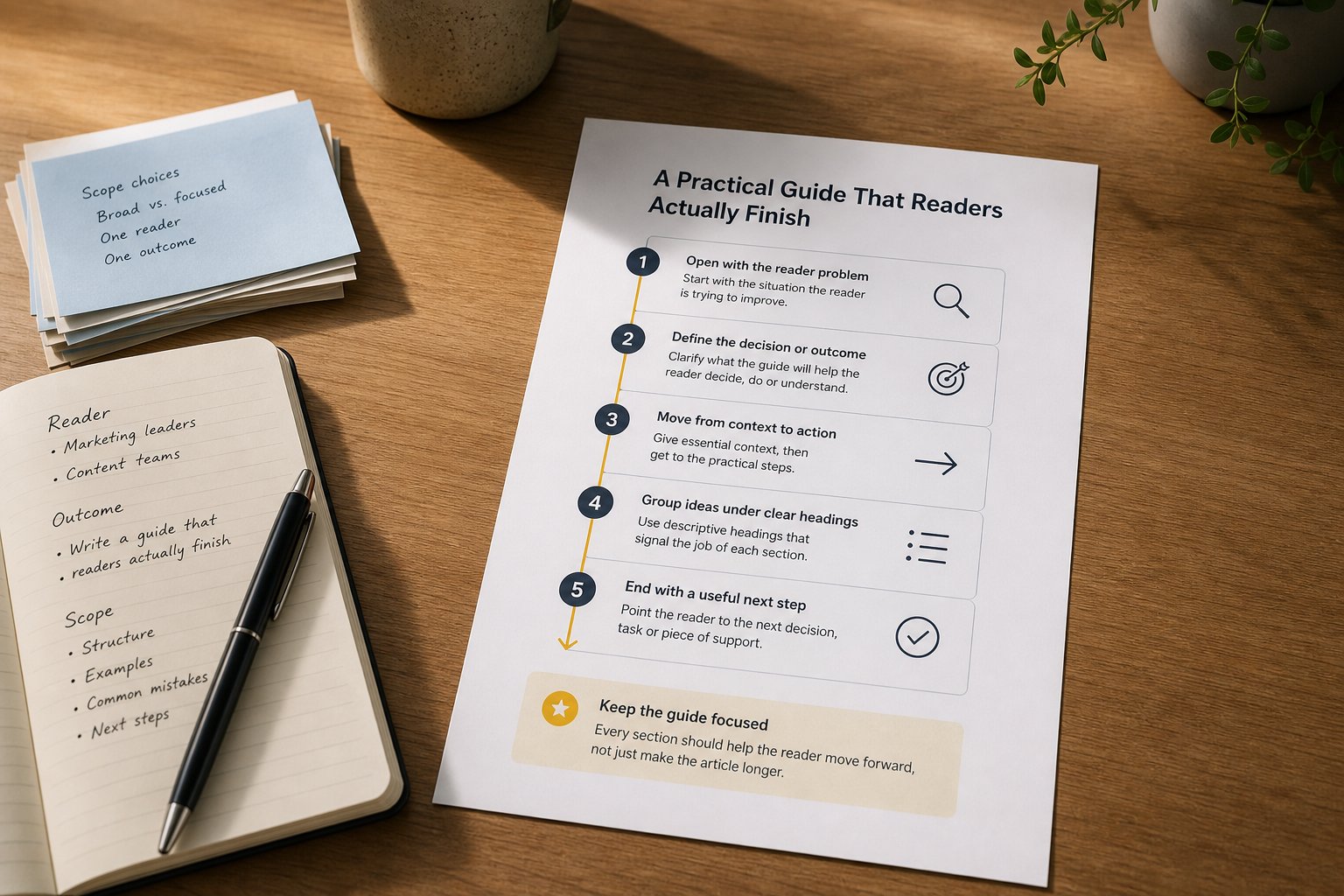
1. Open with the reader problem
The first section should frame the problem the guide solves. Do not start with the history of the topic or a broad industry statement. Start with the situation the reader is trying to improve.
2. Define the decision or outcome
Once the problem is clear, say what the guide will help the reader decide, do or understand. This creates direction and makes the rest of the article easier to follow.
3. Move from context to action
Readers typically need enough background to act, but not so much that the piece stalls. Put the essential context before the practical steps, then keep the process moving.
4. Group related ideas under descriptive headings
Headings should do real work. They should tell the reader what the section contains, not just label a topic. “Choosing scope” is more useful than “Planning”, because it signals a specific job.
5. End with a useful next step
The final section should not repeat the whole article. It should point the reader towards the next decision, task or piece of support they need.
This kind of structure matters because readers often skim first and read later. Clear headings, logical sequence and short paragraphs make the guide easier to use, whether someone reads it start to finish or returns to it later.
How to use examples, steps and summaries without overloading the page
Examples make abstract advice usable, but too many examples can make a guide feel crowded. Use them where they clarify a decision, show the difference between approaches or make a process feel concrete.
A good example is bounded. It should show one specific situation, not open another topic. If the guide is about choosing scope, a short example might show the difference between a broad topic and a tightly framed one. That is enough to make the point without turning the article into a case study.
Steps work best when the reader has an actual sequence to follow. If there are real stages, number them. If the content is more interpretive, use subheadings instead of a long procedural list. Not every guide needs a checklist.
Summaries are useful when they help the reader retain the main decision. They are less useful when they simply repeat the previous paragraph in compressed form. A short recap at the end of a section can work if the topic is complex, but it should add orientation, not filler.
The same rule applies to detail. Add detail where it changes the reader’s next move. Leave it out where it only proves the writer has done more research than the reader asked for.
Common mistakes that make guides feel vague or bloated
Most weak guides fail for predictable reasons.
Starting too wide
If the opening tries to cover the whole category, the reader has to work too hard to find the point. A practical guide should narrow quickly.
Writing for every reader at once
Mixed levels create muddled content. Beginners feel lost, while experienced readers feel slowed down. One guide cannot do every job well.
Using headings that do not guide
If headings are generic, the reader has to keep reading to find out what each section is for. That breaks the flow and makes the guide harder to scan.
Repeating the same point in different words
This is one of the fastest ways to make a guide feel bloated. If a section does not add a new mechanism, caveat or decision point, it probably does not need to be there.
Adding detail without a purpose
Specificity is valuable only when it moves the reader forward. Extra explanation that does not affect action just increases friction.
Ending without a next step
A guide should close with direction. That does not mean a hard sell. It means giving the reader a sensible way to continue, whether that is a related article, a template, a checklist or a conversation with the right team.
A practical way to keep the guide useful from start to finish
If you are planning a B2B guide, build the structure before you expand the copy. Decide who it is for, what problem it solves and what the reader should be able to do by the end.
Then check each section against one question: does this help the reader move forward, or does it just make the article longer?
That single test keeps the guide focused. It also makes it easier to scale content without losing the brand knowledge, structure and editorial judgement that make it useful.
Was this article helpful?